Istanbul — The Perfect Host — Intense, Inviting, Intriguing.

The call to prayer from Istanbul’s Blue Mosque reverberates around Sultanahmet Square, just as it has for more than four hundred years. My mind swirls with heartwarming memories of my last visit here with my husband and daughter in 2004. But upon approaching the mosque, those memories are rudely disrupted by a disturbingly long line of tourists waiting to enter. A local approaches, telling us it’s better first thing in the morning or later in the evening. We heed his advice.


Although there’s no line up when we return in the evening, the Blue Mosque is full. Throngs of people make their way through, many consumed with getting the perfect photo of themselves, the mosque's opulence serving as a backdrop. It’s a far cry from our previous trip, when our daughter, then thirteen, fell in love with the mosque and we’d go there to sit and soak up the ambiance, often the only people there.

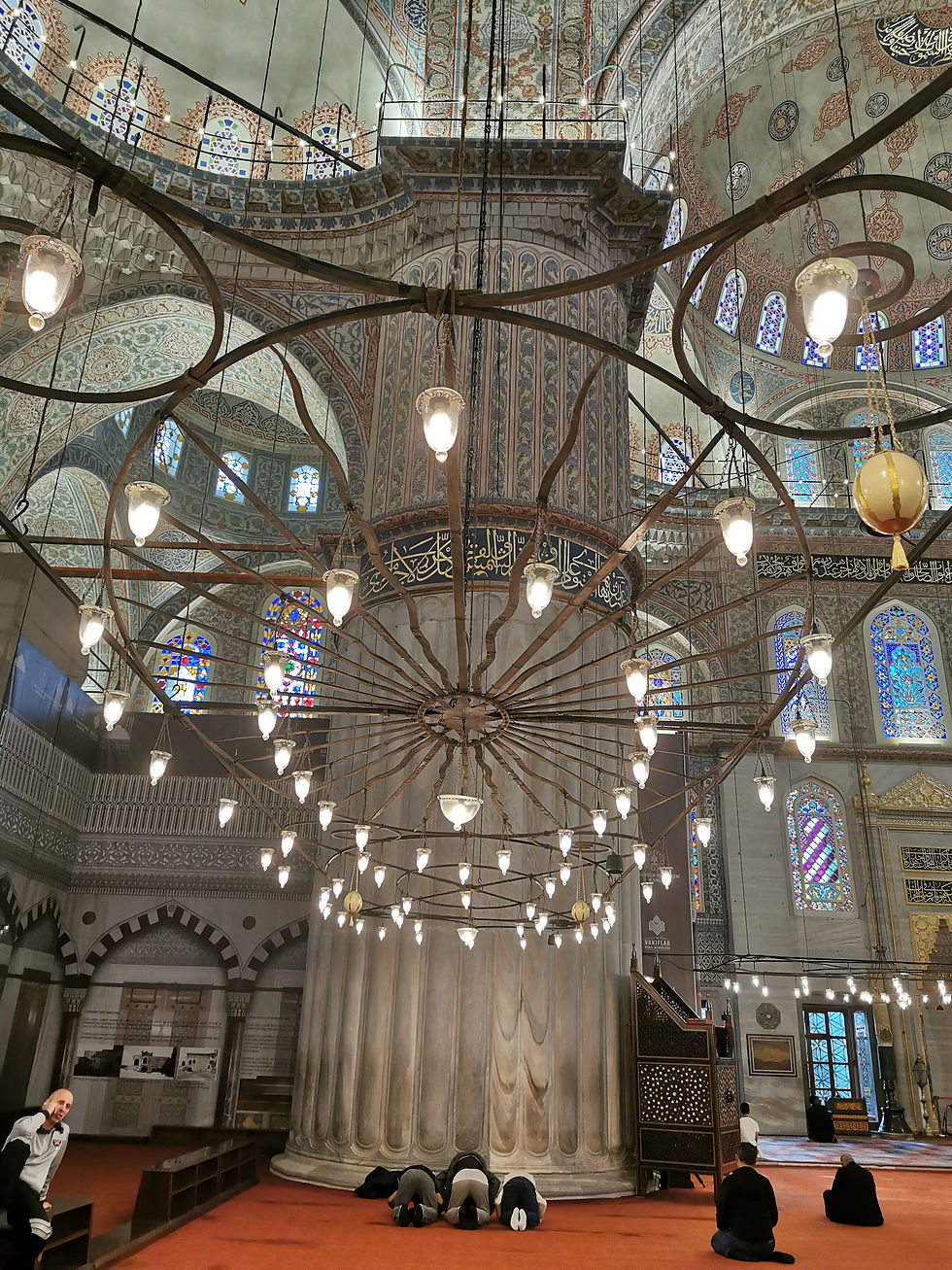
It’s now obvious that we were somewhat naive in our expectations. Even though we’ve been travelling for more than fifty years and have seen the impact of mass tourism facilitated by the ease of travel in our digital world, we are unprepared for the crowds of visitors. However, we remind ourselves that we, too, are contributing to the crowds and reconcile ourselves to the current reality. After all, Istanbul, formerly Constantinople, is still a remarkable city where several civilizations – Roman, Byzantine, and Ottoman left behind iconic structures embodying the legacy of empires.
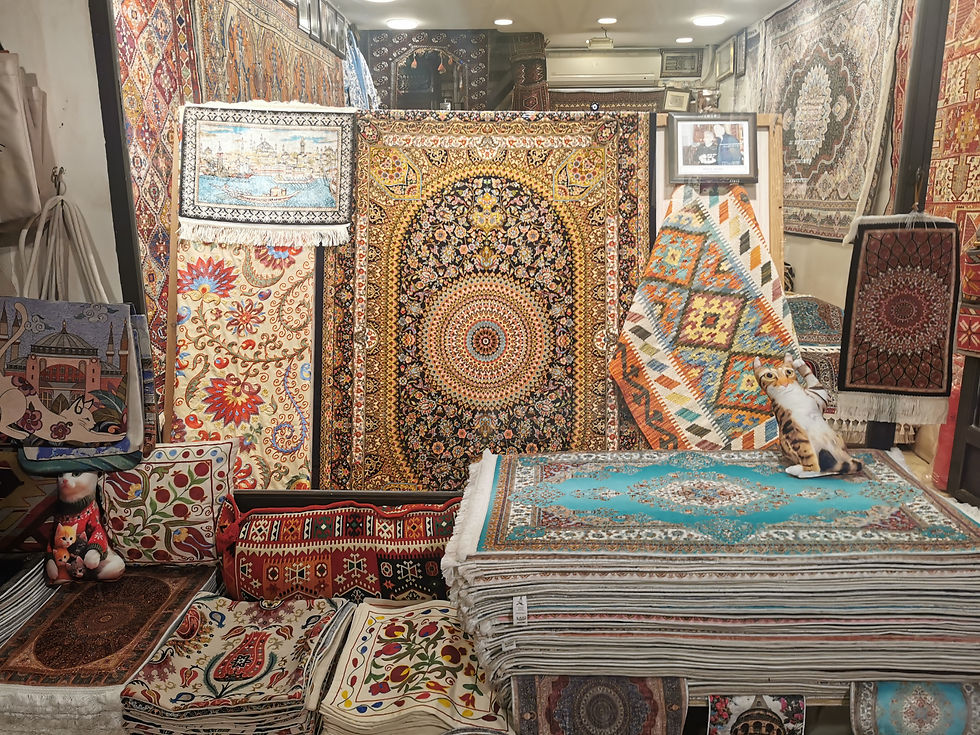
One thing that hasn’t changed is the carpet sellers. Carpet shops line the sidewalk to Sultanahmet Square, and we are approached daily with enticing offers to visit their stores. We know from experience that if we take them up on their offer, it’s a long routine of multiple cups of tea and a mind-numbing display of carpets constantly laid out by an assistant. And, the bargaining skills of Westerners pale in comparison to those of the Turks. We had assumed that online sales of Turkish carpets would be the death knell for the salesmen, but speaking with other tourists, we realize that many get caught up in the excitement of the moment, often paying through the roof.
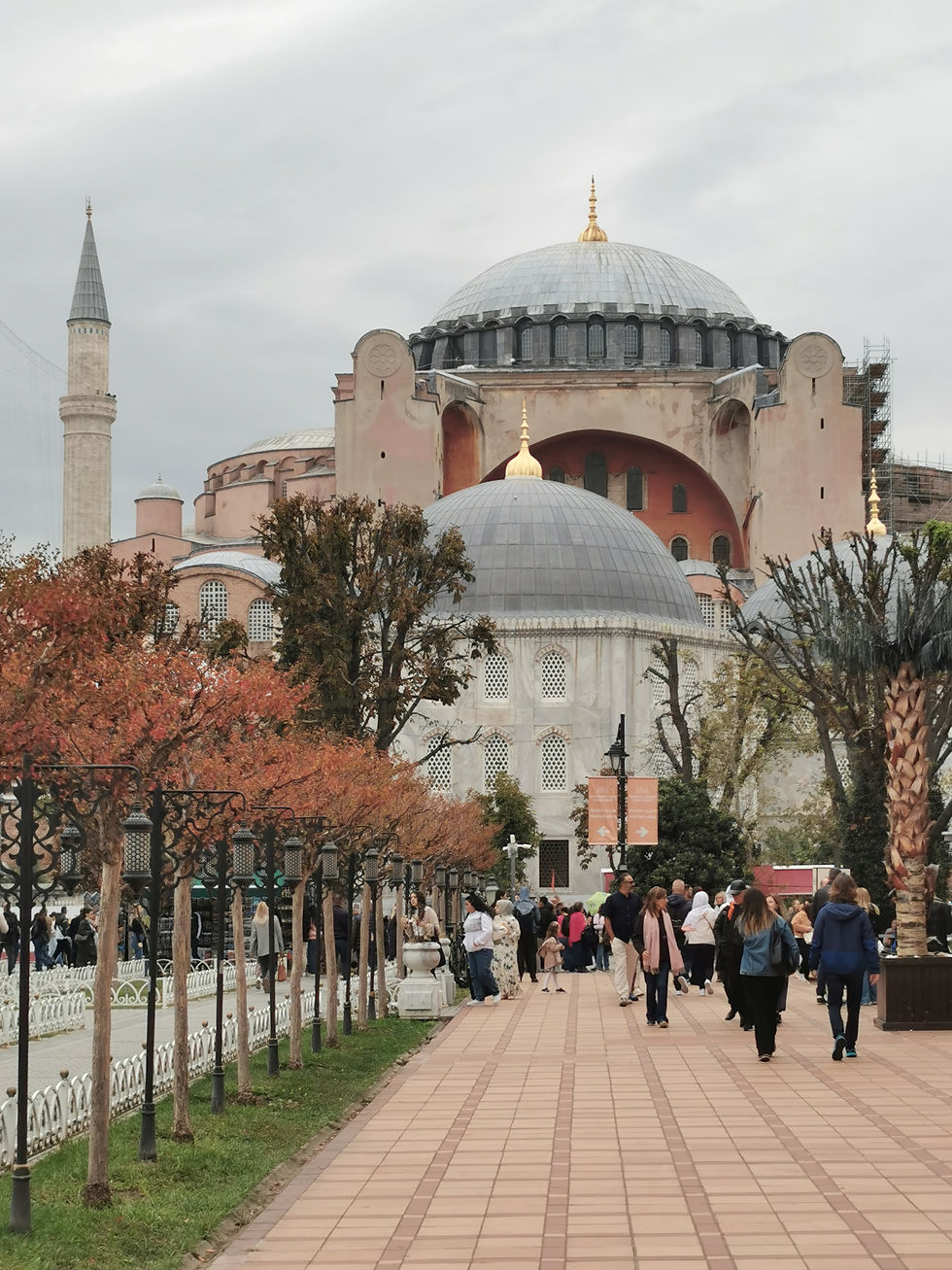
We continue to dismiss carpet salesmen who ply Sultanahmet Square as we walk the short distance from the Blue Mosque to the Hagia Sophia. Originally built as an Eastern Orthodox church in 537 CE, it was then the world’s largest interior space and remained the world’s largest cathedral for almost a thousand years. It is considered the zenith of Byzantine architecture and is the most important Byzantine structure in the world. It served as the Cathedral of Constantinople until 1453, when Constantinople fell to the Ottoman Empire. It was soon converted to a mosque and minarets were added.
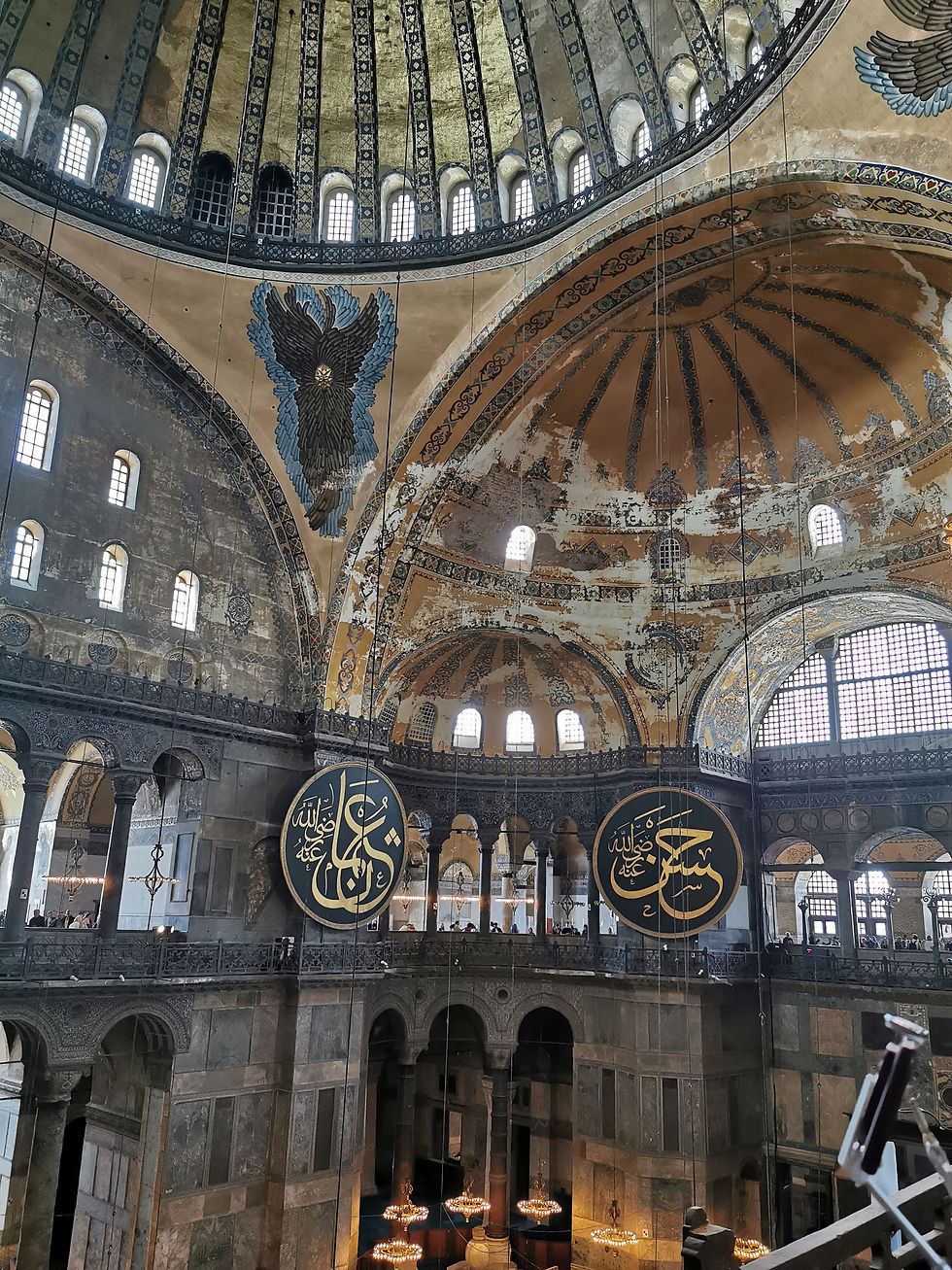
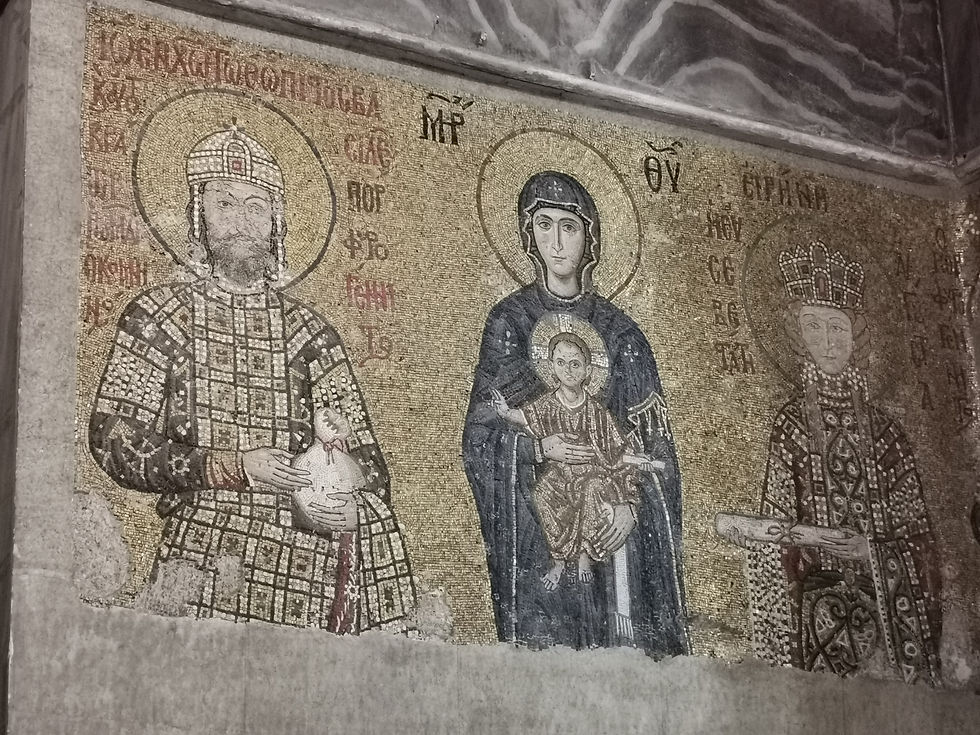
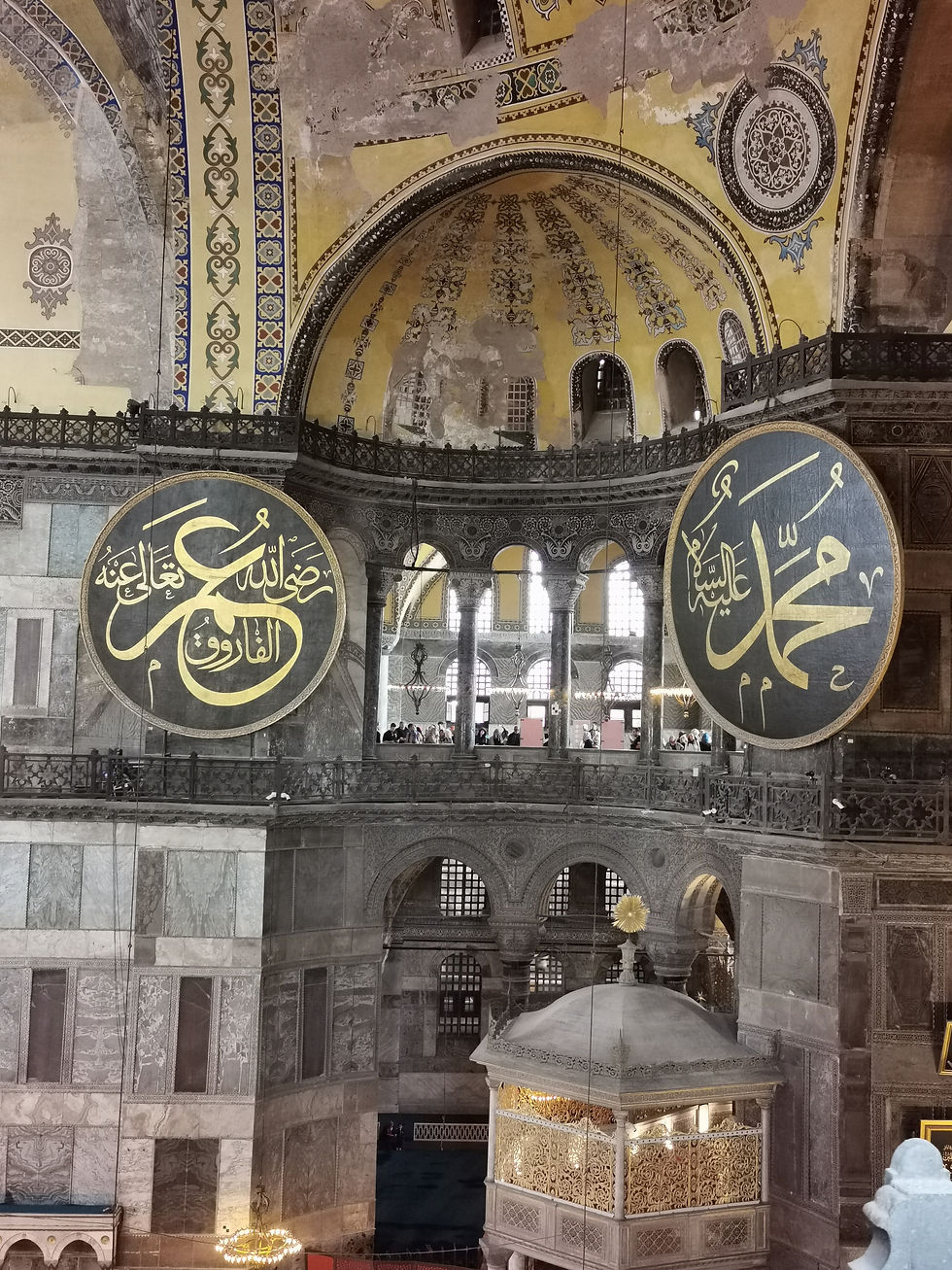
On our last visit, it functioned solely as a museum; now it serves as both a mosque and a museum. Its grandeur inside and out reflects the work of artisans throughout the centuries. Upon entering, I can’t stop gazing at the central dome. Rising 55.6 metres, it looks as if it's floating on the arched windows. Eight huge 7.5 metre-wide black medallions with golden Arabic inscriptions catch my eye next. Suspended between the columns in the nave, these calligraphic medallions were added under the Ottoman Empire. The remaining Byzantine mosaics of the Hagia Sophia, depicting Christ, the Virgin Mary and other early Christian figures that have survived the ravages of time, are a testament to the glory of Byzantine art.


The grey rainy day doesn’t dampen our enthusiasm for a visit to Topkapi Palace, a mere ten-minute walk from the Hagia Sophia. Now a museum, it was the administrative centre of the Ottoman Empire for four centuries. Although the palace complex is huge, covering 350 hectares, only a few of the hundreds of rooms are open to the public.
The empire’s power and artistic accomplishments are evident as we approach the magnificent main gate, with its sublime Arabic calligraphy. Inside is the first of four main courtyards, only one of which would have been available to all citizens, while the others were designated for specific groups and purposes.


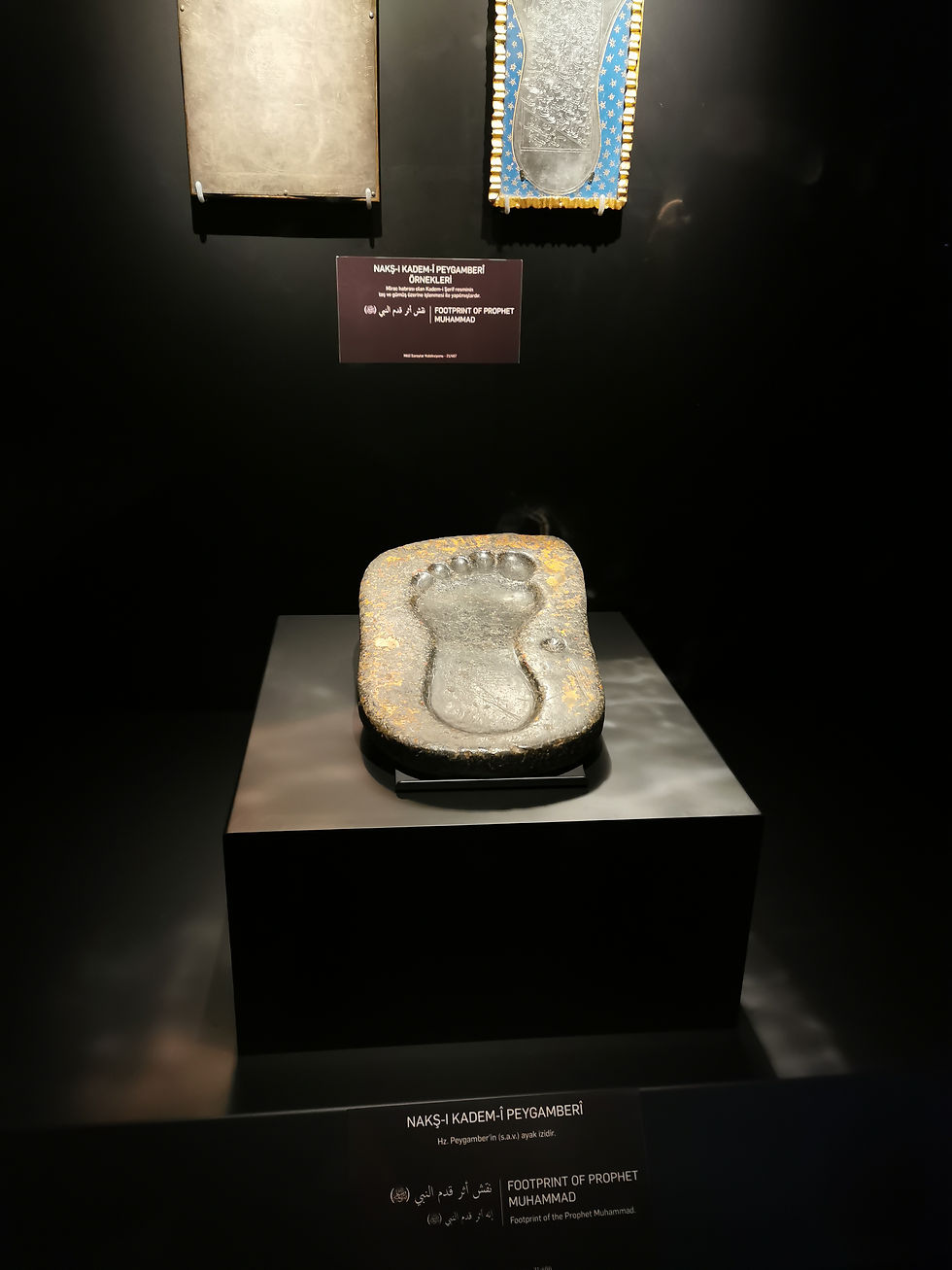
We’re intrigued by the Chamber of Sacred Relics, which houses items of profound cultural and religious significance: the staff of Prophet Moses, a relic fragment of John the Baptist’s arm and skull bone, and the footprint of Prophet Mohammad. The only drawback is the crowds. These preserved relics have been venerated for centuries, attracting visitors from around the world. Consequently, everyone is hurried through by guards, giving little time for introspection.


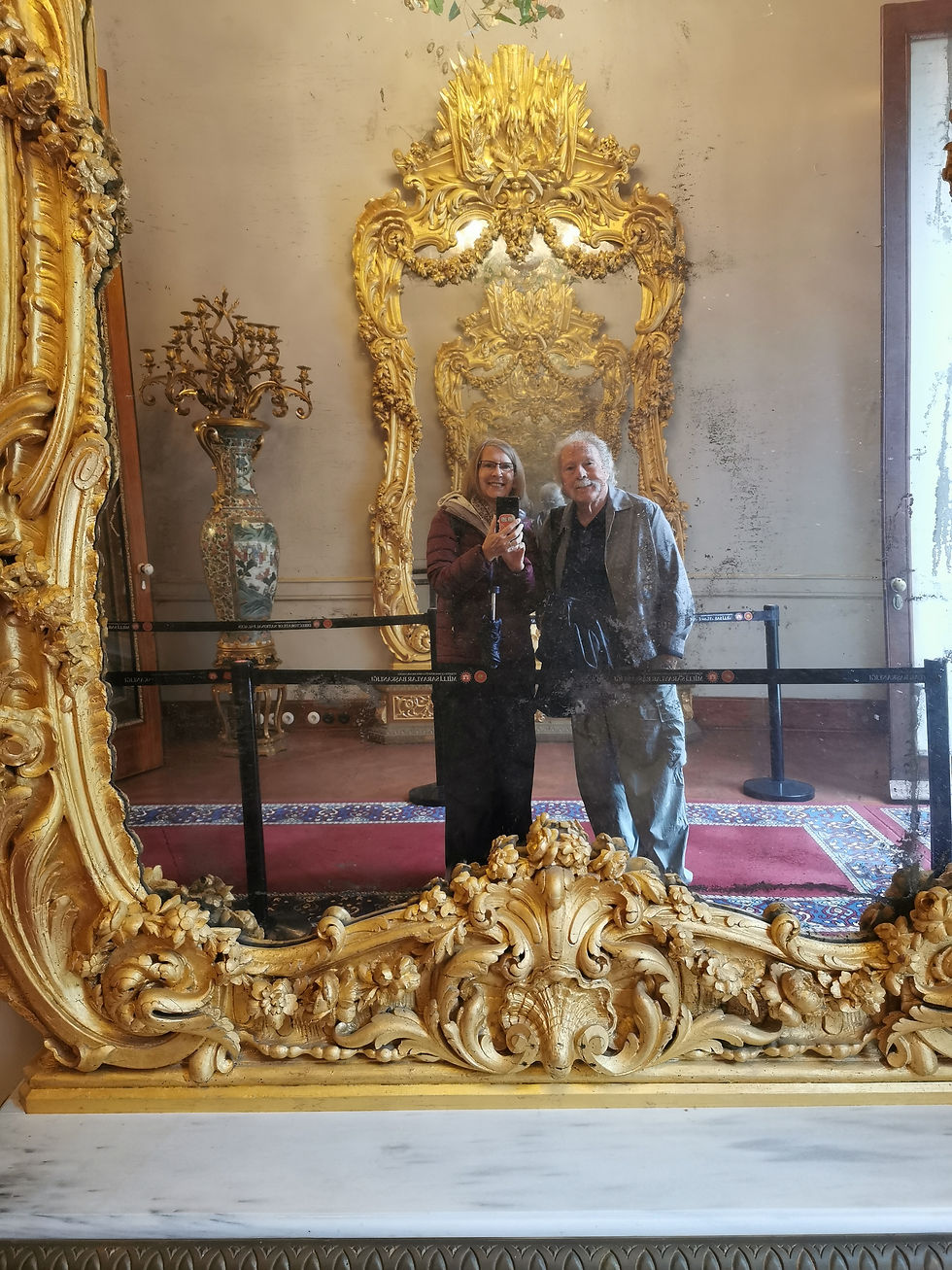
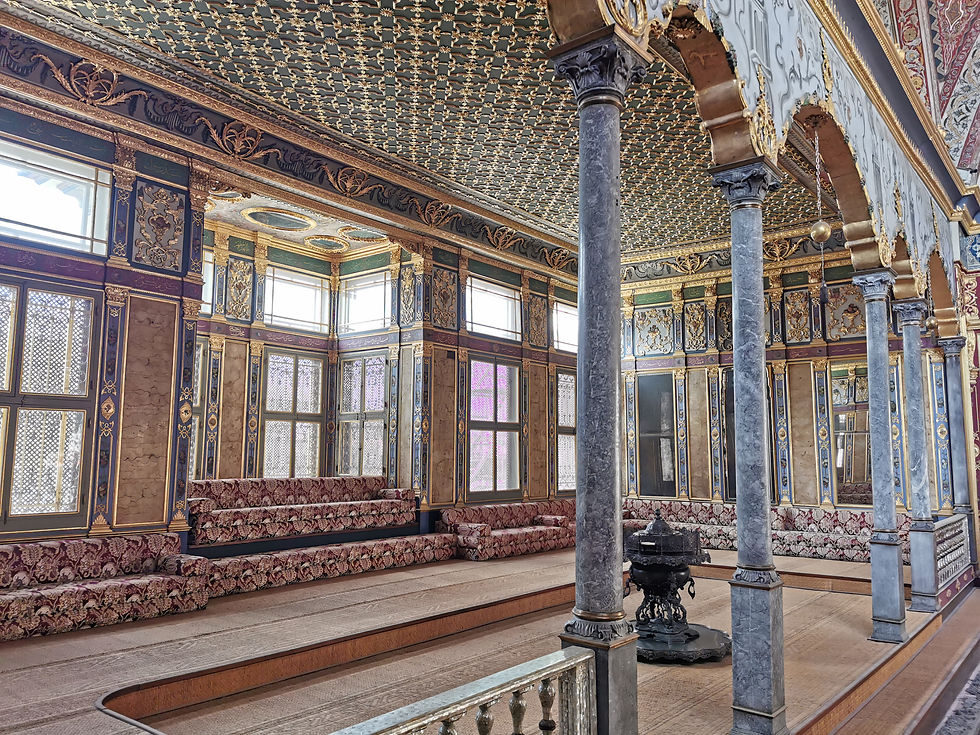
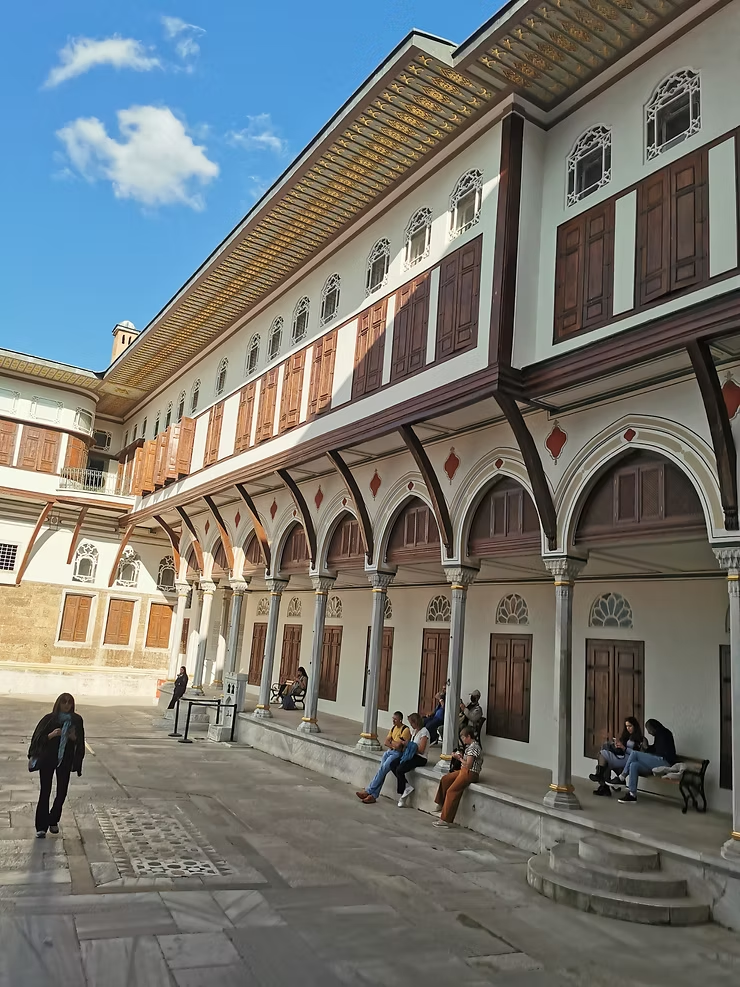
Historical stories of libidinous sultans who lived here are legendary. Curious, we pay extra to see the Harem, accessible only with a guide. The Harem was home to the Sultan’s children, sisters, daughters and wives, all of whom lived secluded behind its walls. The Courtyard of Favourites was reserved for those women who rose to the top of the hierarchy, usually concubines who gave birth to the Sultan’s offspring. The Harem’s lavish architecture is eye-catching, but it’s difficult to imagine the stunning courtyard bustling with women and children.

However, not all of Istanbul’s archaeological splendours are above ground. Some lie hidden under our feet. Only a five-minute walk from the Topkapi Palace is an underground wonder — several hundred ancient cisterns. We’re headed to the largest, the cavernous Basilica Cistern. At 1,400 years old, it’s one of the oldest extant structures in the city. Capable of holding 80,00 cubic metres of water, the level is now kept low to accommodate tourists. Seven thousand slaves were reportedly used in its construction.

Entering the cool dampness, we’re wowed by the more than three hundred, nine-metre-high marble columns, many of which were snatched from toppled pagan temples, holding up this ancient archaeological feat. Mysteriously, two gigantic heads of Medusa, a venerated figure of ancient Greek mythology, rest in a corner, one on its side, the other upside down. It’s not known if they were part of a temple dedicated to Medusa or built for the cistern.

As we wander around, the modern-day lighting constantly changes, casting various hues and colours onto the columns and reflecting off the water, imbuing a mystical feel and ambiance. We’re almost reluctant to leave.

Reentering the traffic-choked streets of Istanbul is jarring. Car ownership has quadrupled in Turkey since we visited twenty years ago, and some days it seems as if they’re all in Istanbul. Taxis are a last resort as they sit mired in traffic. As tourists, the sleek, modern tram system transports us to many of the major sights. We’re initially told that we need to load money onto an Istanbul transit card to pay with the automated system, but later learn we need only tap our credit card upon entering. I soon discover public toilets work the same way. Just tap and go.


Straddling Europe and Asia across the Bosporus Strait, east really does meet west in Istanbul. Most tourists spend time only in Eastern Istanbul, but we don’t want to miss the other face of the city. A tram whisks us to the ferry docks, where, after some confusion, we locate the correct dock for the ferry to West Istanbul.
Western Istanbul seems somewhat less hectic. Long lines of people are fishing along the walkway while others are just soaking in the views along the Bosporus. A giant book fair has attracted many visitors, many of whom are sitting on benches enjoying their new purchases.

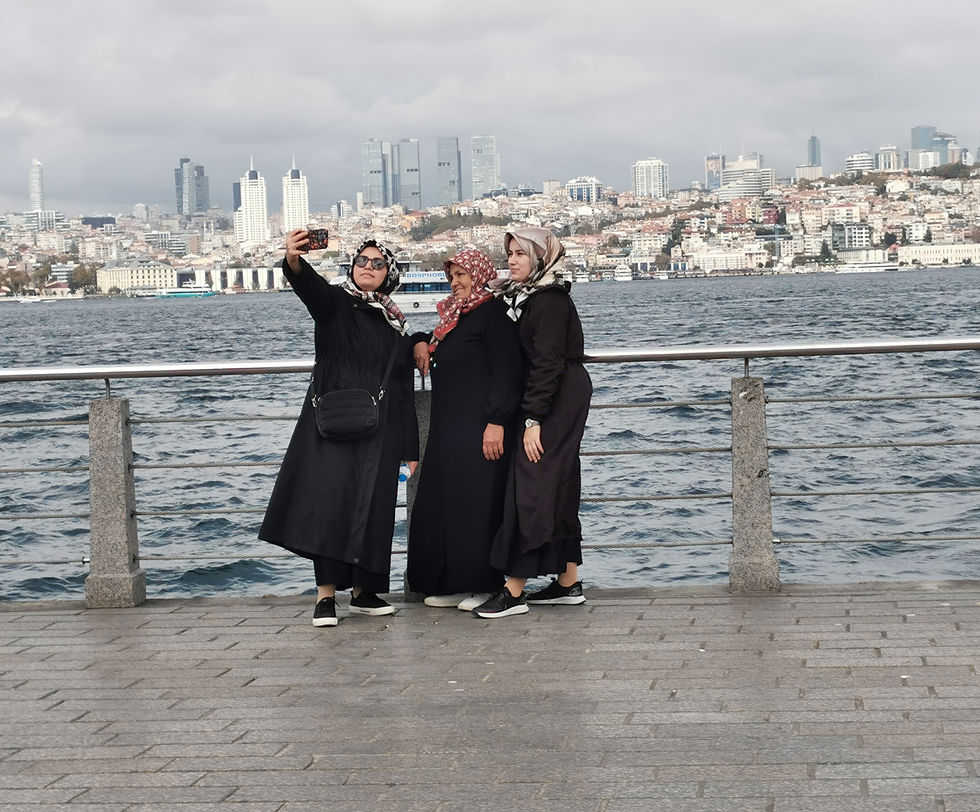
It’s here in Western Istanbul that we decide to tackle the city buses. We want to visit Beylerbeyi Palace, a 19th-century Ottoman summer residence. Google’s bus route map is somewhat helpful, although we’re never entirely sure we’re on the right bus. But we’re in luck this time and arrive at the palace in a few minutes. The guided tour of the palace is short, but the setting on the Bosporus Strait is truly spectacular.

Returning to East Istanbul by ferry at sunset, we can’t take our eyes off the vista. It turns out that ferries are one of the best and cheapest ways to view Istanbul’s unforgettable skyline.

However, the trip left us wanting to see more sights from the unique perspective of the water, and we decide to take a two-hour daytime boat tour the following day.
We aren’t disappointed. It’s quite literally a trip through the centuries, from ancient palaces to modern neighbourhoods. We have good seats for the stunning views, such as the Dolmabahce Palace, Suleymaniye Mosque, Rumeli Fortress and the Bosphorus Bridge. As it's the weekend, there are many Turkish families on board, and it’s entertaining to see the children’s excitement when they spot their country’s iconic structures. The tour is over all too soon, and we’re back in the hecticness.


We decide to brave the crowds and head to the Grand Bazaar. A visit to Istanbul wouldn’t be complete without it. And grand it is — a labyrinth of sixty-one covered streets and almost 5000 shops. Yes, it can be a tourist trap, especially for those who come unprepared to haggle, a skill at which all Turkish shopkeepers are experts, but it’s also an enthralling bazaar where the heart of Istanbul’s Old City beats. Part of the fun is just getting lost in the maze of alleys. You never know what you’ll find. We stumble into a traditional coffee/tea shop where we just sit and watch the sometimes chaotic crowds.


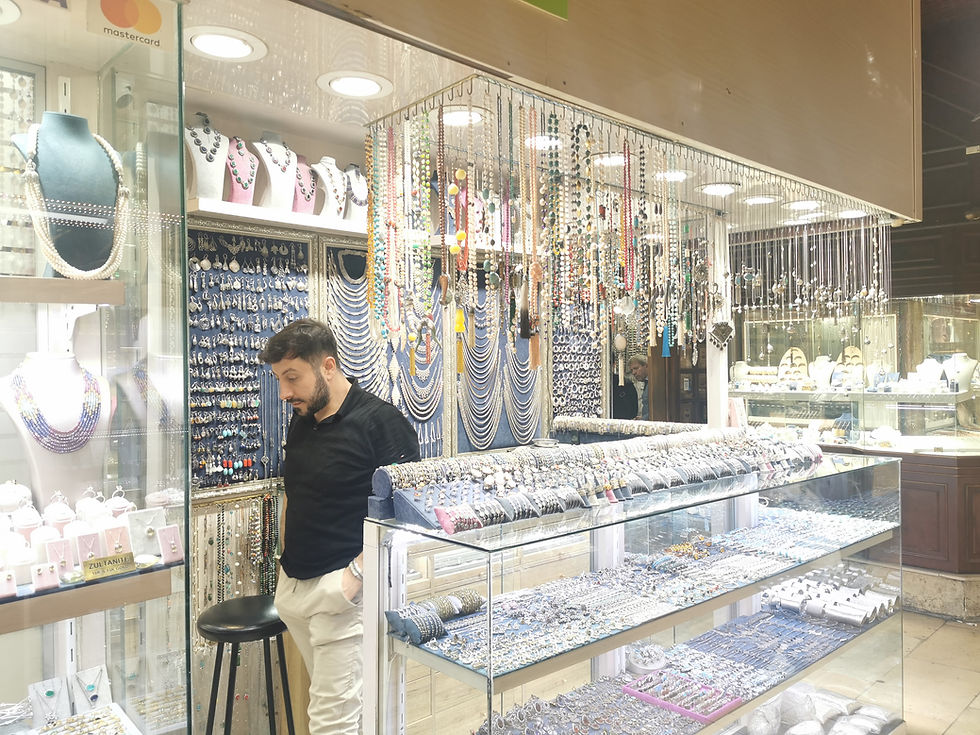

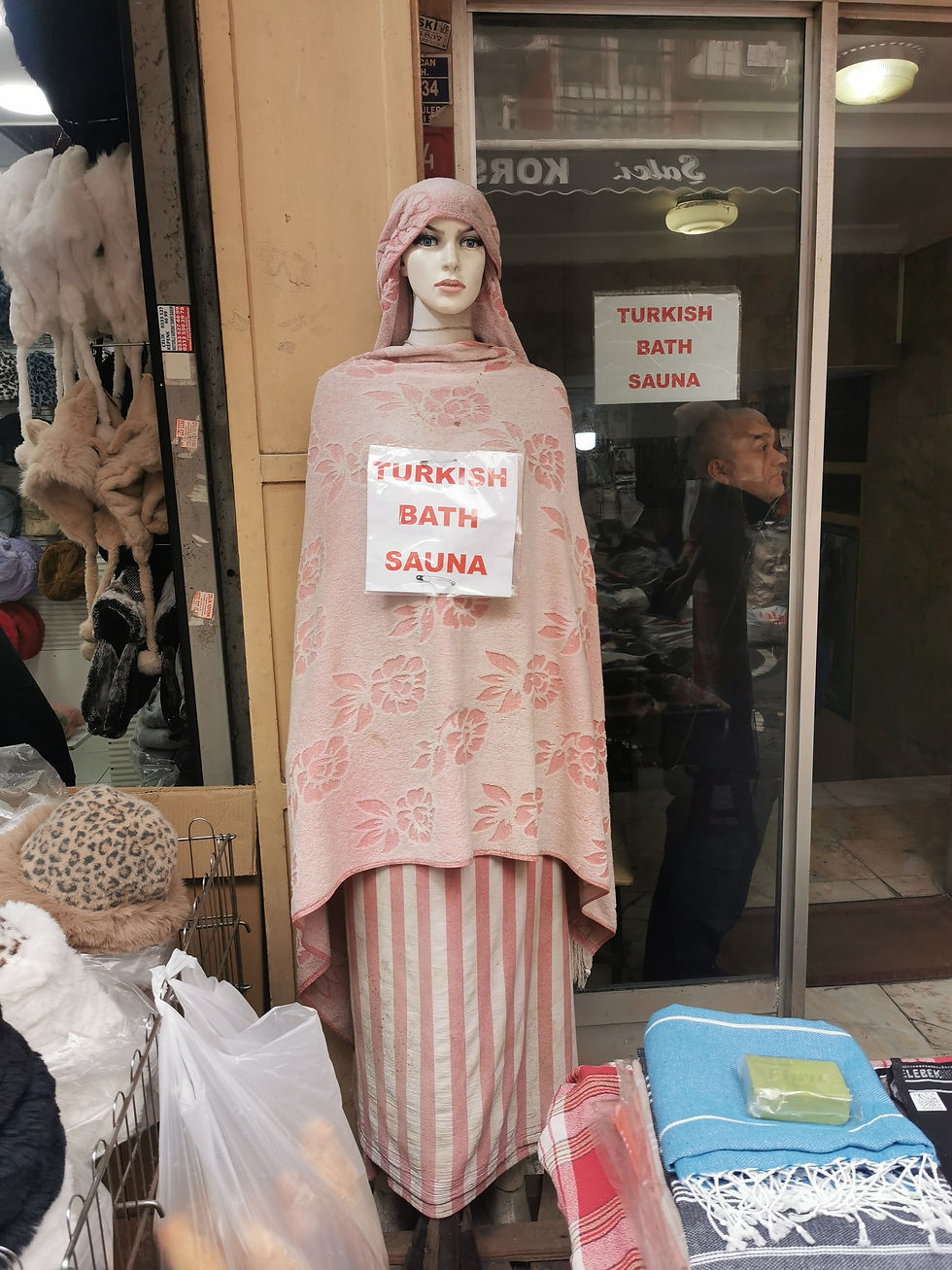
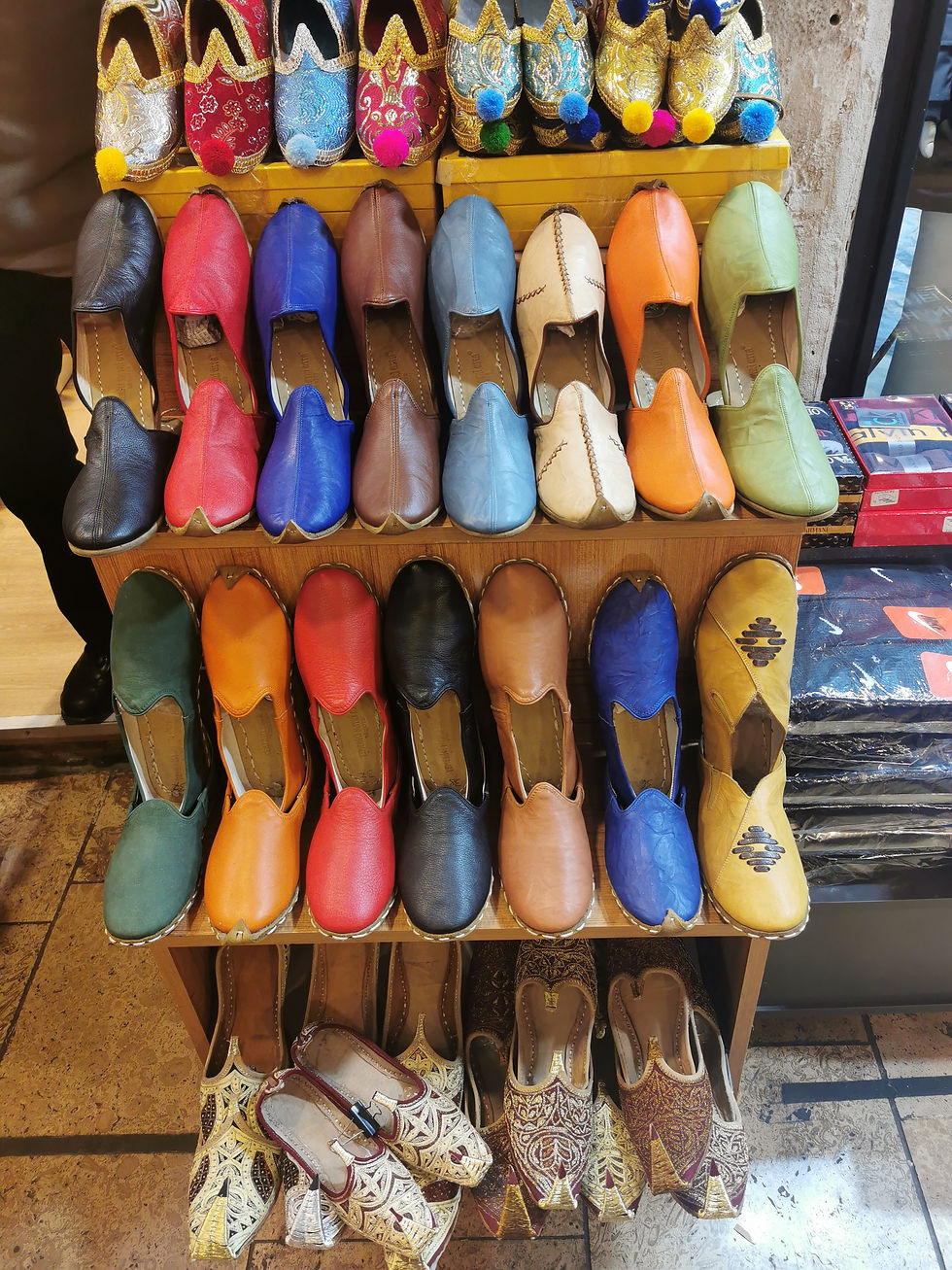
I have no intention of buying anything as our house is full of souvenirs from our trips, but, not surprisingly, my resolve melts when a beautiful embroidered jacket catches my eye. Employing my best bargaining skills, I get it for a good price — I think.
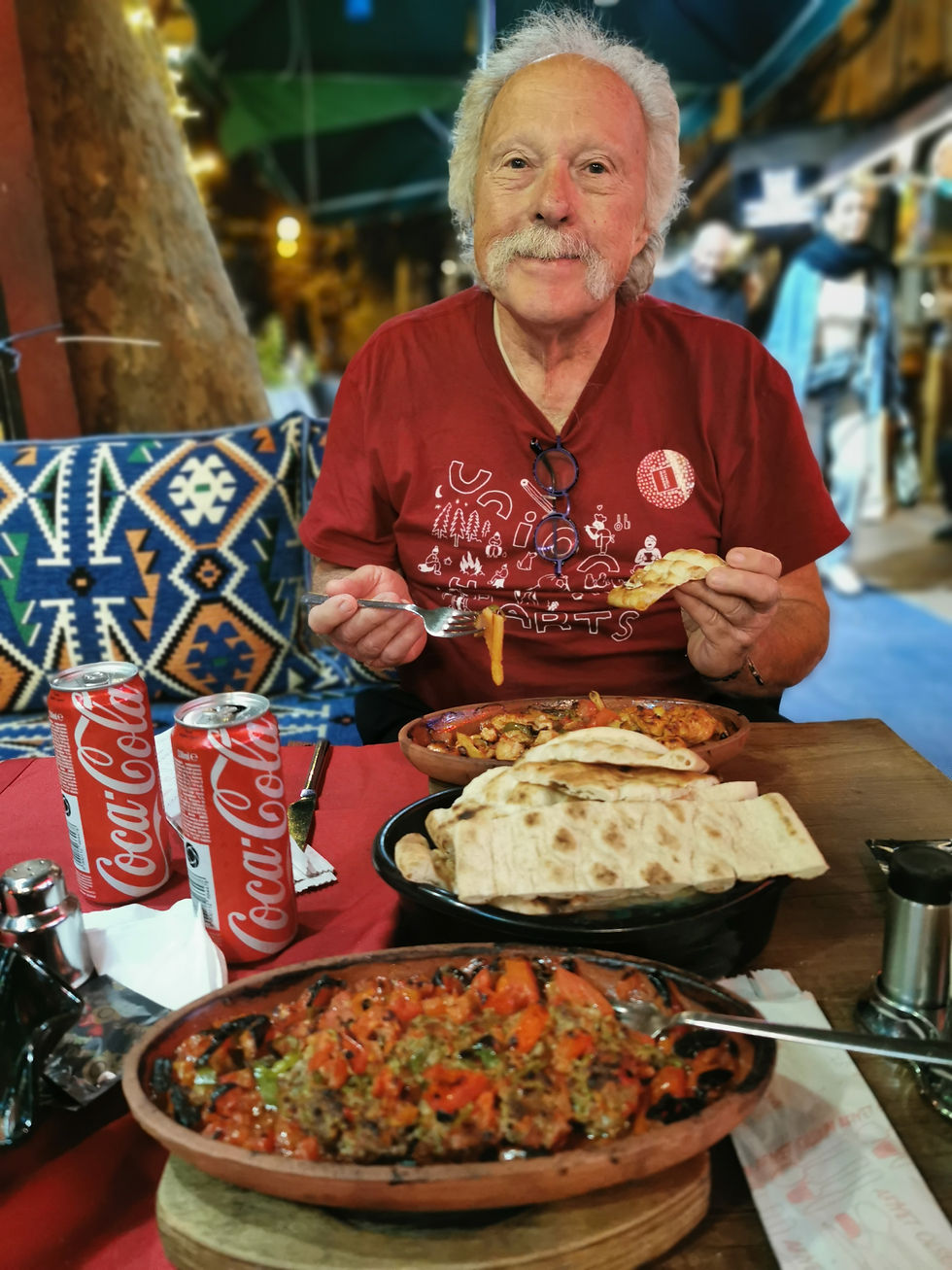
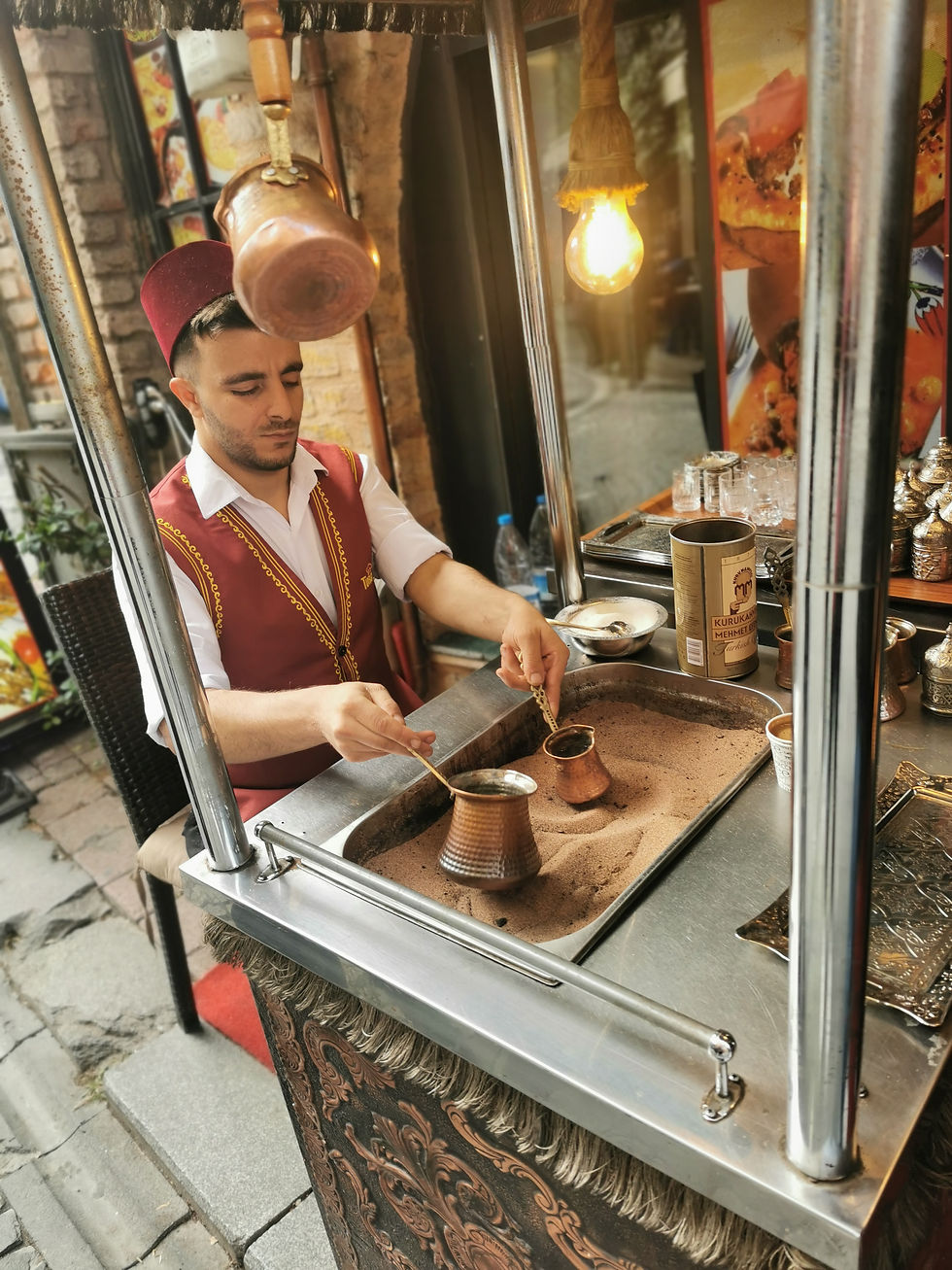
However, it's not just the Grand Bazaar where the old soul of Istanbul still survives — it’s baked into its traditional foods. A mouthwatering testament to Turkey’s identity lies in its cuisine. Ottoman cooking encompassed Central Asian, Mediterranean and Middle Eastern culinary traditions, resulting in a rich food landscape. Don’t think of just the ubiquitous kebabs. One of Turkey's most famous dishes is piyaz salad, a salad based on candir beans with a tahini-based dressing. Eggplant is perennially popular and saksuka, cooked with garlic, tomatoes, zucchini and chili, is one of the tastiest dishes. The list of delightful Turkish foods is long, and it’s a big decision every day to decide what to try next. Don’t ask us what our favourite is though — choosing from such a delectable array is impossible. And the unforgettable Turkish coffee is another story in itself.



Visiting the Istanbul Modern, founded in 2004 as Turkey’s first contemporary art gallery, is a reminder that Istanbul’s old soul belies a new one. The Turkish Republic, fashioned from the remains of the Ottoman Empire by Mustafa Kemal Atatürk, celebrated its one-hundredth birthday in 2023. As president, Atatürk modernized Turkey, establishing a secular republic and implementing radical reforms: women got the right to vote, the caliphate was banned, the Arabic script was substituted with the Roman alphabet and European laws were embraced.


Although Turkey continues to modernize its infrastructure with a construction boom employing many, there has been a shift to conservatism under Erdogan, who has been president since 2004. Erdogan has blurred the lines between state and religion, while squashing dissent and decimating human rights. A couple of people spoke to us surreptitiously, first ensuring no one was around and even then speaking in whispers, describing how everyone is fearful of the consequences of speaking out.

Turkey has a long, tumultuous history: Roman, Byzantine and Ottoman Empires, a military dictatorship during World War I, and a radical shift to independence and democracy. How this current situation will play out is anyone’s guess, but the shift to the right by many countries is not encouraging.
Despite the political changes, the people of Istanbul remain friendly and hospitable. Our fondest memory of our first trip here is the welcoming nature of the Turkish people. And that hasn’t changed. Hospitality is ingrained in the culture – a sign of their respect and warmth. We’re always greeted by smiles and warm welcomes – traditional hallmarks of Turkish cordiality.
For us, travelling is not just visiting historic sites, but also a search for cultural experiences and interactions with locals. The warmth of the Turkish people, combined with a rich history dating back to ancient and classical periods, is a delightful mix of history and hospitality, making Turkey an ideal country to visit.



Comments