Istanbul — A Cat Lover’s Dream

Istanbul is a dream come true for cat lovers like us. These soulful furry delights are everywhere: lounging like royalty on a park bench, peering down at you from a fence post, snuggling beside you in a local cafe, waiting expectantly at the local butchers, or roaming ancient ruins. All are unperturbed by the chaos of Istanbul, seemingly without a care in the world.


There are an estimated 250,000 stray cats among the 15 million residents of Turkey’s largest city, earning it the nickname Catstanbul. But these are not mangy, emaciated cats — they’re well-fed and cared for by local citizens. The Prophet Mohammad was known to have a fondness for cats, and felines held a special place during the Ottoman rule. The Ottoman Turks established foundations to care for stray cats that helped control the vermin populations.

This tradition continues today. The street cats of Istanbul are seen as community members, and everyone feeds and cares for them. We see small containers of food and water throughout the streets. The affection for felines is still such that they’re even welcomed into mosques, and food touched by them is still considered Halal, foods permissible to eat according to Islamic law, and water drunk by them is allowed for Wudu, a ritual ablution using clean water to wash specific body parts.


Local government-sponsored veterinary services are available for street cats, and neutering is free. A TNR or Trap, Neuter, Return program helps to control the feline population. Some private veterinary clinics offer discounted prices for strays as well, and locals who are able to chip in. Upon seeing many cats with a small piece missing from one ear, we assumed they had been involved in a cat fight. We later learn that ear tipping indicates the cat has been neutered or spayed.


The large stray cat population has given rise to an astonishing revolutionary vending machine. Rather than dispensing snacks and drinks for people, the machines now give food and water to stray cats and dogs. The payment — plastic bottles. People deposit used bottles, and voilà — food and water are dispensed, encouraging both recycling and compassion.

The old soul of Istanbul lives large in its cats — a living embodiment of Turkey’s former capital and a reflection of the city’s unique cultural heritage. The award-winning 2016 Turkish documentary, Kedi, meaning cat in Turkish, follows seven individual cats documenting their daily lives and interconnections with the people around them. Filmed at a cat’s level, we see the world through their eyes.
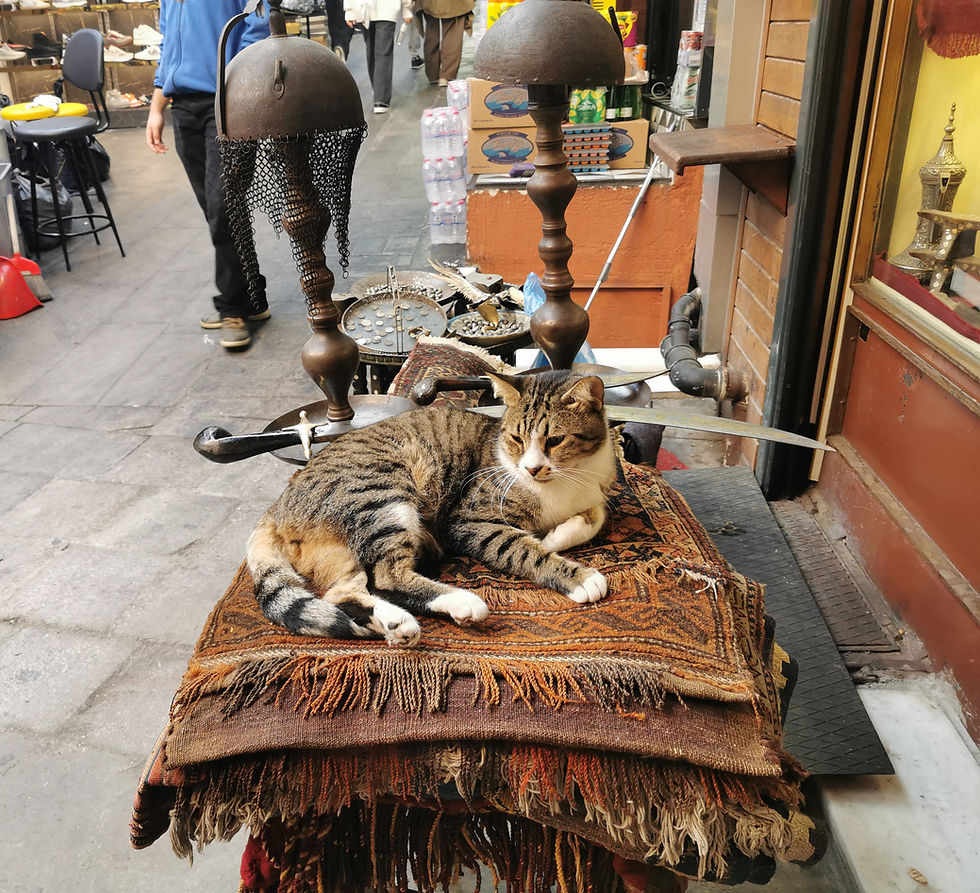


On our final evening in Istanbul, Noel shares his food with the resident restaurant cat, who snuggles up to him and sleeps contentedly until we leave — a fitting end for this city of felines. For us, the cats of Istanbul add a peaceful, pleasurable mix to this hectic city. We never knew where or when a street cat would appear, winding its way around our legs, welcoming us to their city.


Comments