Charming Charyn Canyon

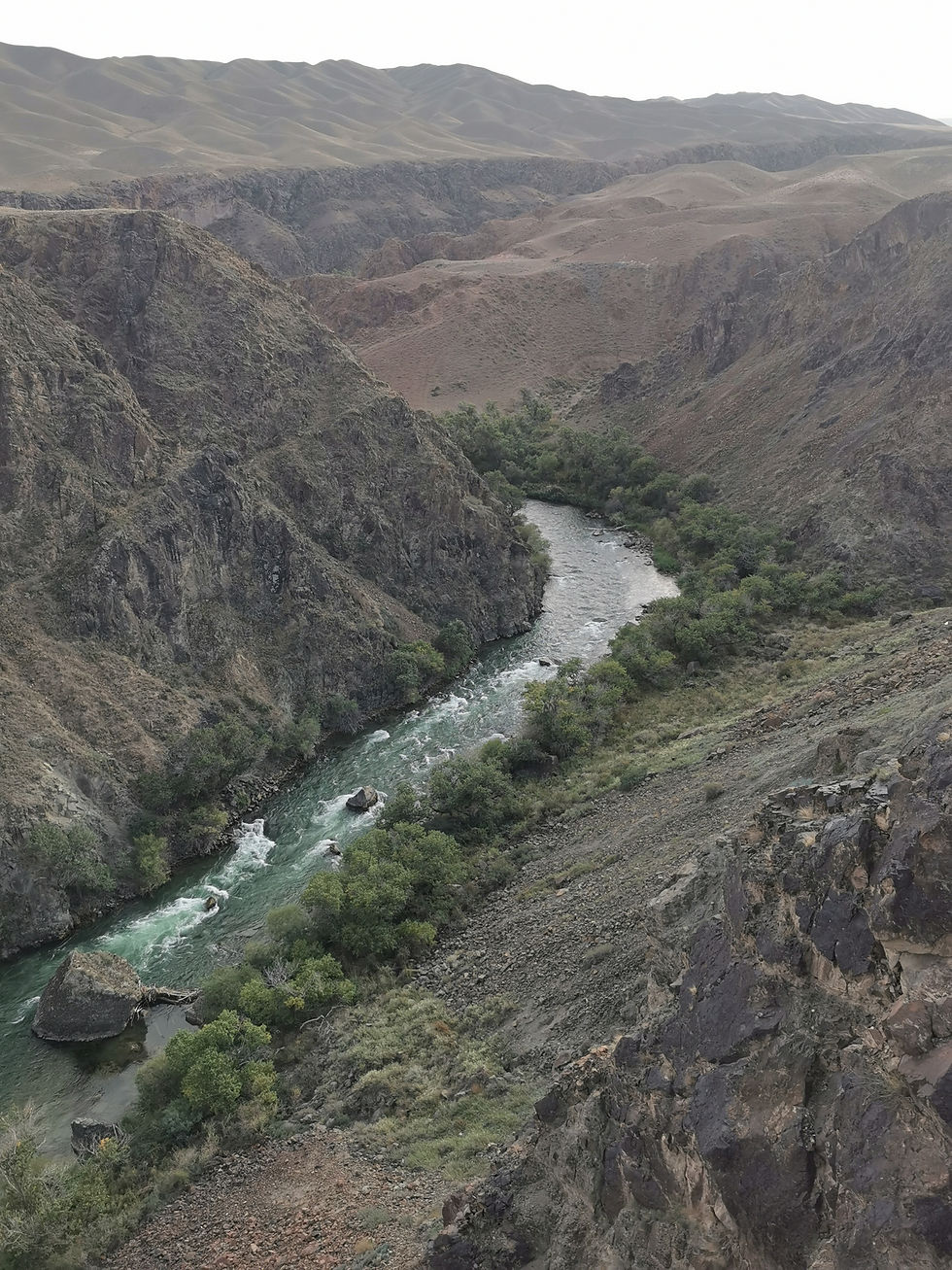
I squeeze my eyes shut as we crest the hill into nothingness, opening them as we careen back down into the steppe grasslands, scattering herds of sheep in all directions. It’s day one of our two-day off-road adventure through Kazakhstan’s remote and wild terrain of Charyn Canyon National Park, home to the Charyn River.

Our skilled driver-guide Damir, who knows this area intimately, gives us a bird’s-eye view of unique landscapes along the canyon’s 154-kilometre length. He has an encyclopedic knowledge of everything Kazakh, from agriculture and industry to food and culture. We pepper him with questions, to which he gives in-depth answers in flawless English as he expertly maneuvers our four-wheel-drive SUV over the hills and plateaus that punctuate the vast, flat steppe.
We don’t meet another vehicle while off-road, evoking a sense of solitude and liberty. I feel like an explorer discovering remote places — that sense of adventure in the unknown.
Once covered by the ancient Tethys Ocean around 100 million years ago, as was all of Kazakhstan, the canyon’s fantastical geological formations, beaten and shaped by millions of years of erosion by wind and water, create a whole different world. Moon Canyon’s cliffs, spires, and rock sculptures give it a moon-like appearance, while Black Canyon’s dark, rocky, moody cliffs stand in sharp contrast to the shades of green along the banks of the Charyn River. Napoleon Panoramic Site, so-called for the apparent resemblance of its rocks to the French emperor, requires more imagination than I can muster. Austrian Viewpoint looks nothing like Austria, so that name remains a mystery.


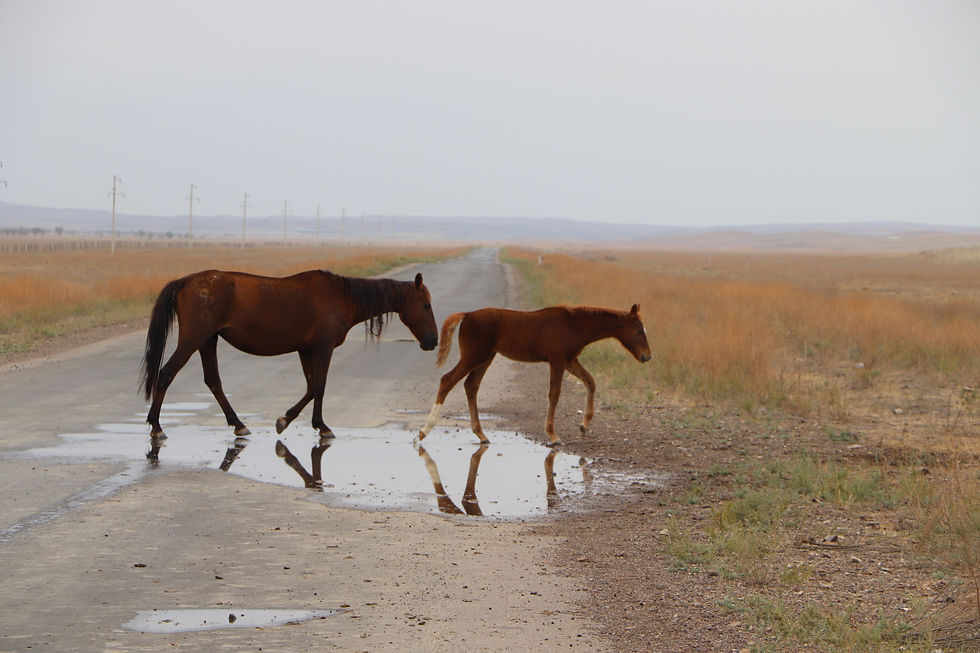
In between canyons, on the endless steppe lands, horses, sheep, and camels graze free range. Only the camels bear signs of ownership, shorn, marked with paint, or with a small sign around their necks. Kazakhs' love of meat is a reflection of their nomadic past — for hundreds of years, they were herders who depended on these animals for food.


Formed over 12 million years ago, the two-kilometre-long Valley of Castles lives up to its hype, looking as if playful giants molded towering sandstone rocks into whimsical shapes that fancifully change shades throughout the day. It’s a downhill hike to the Charyn River, but Russian-style pickup trucks are available for those who, like us, don’t fancy the arduous trip back up.


We enthusiastically agree to Damir's suggestion to leave our guesthouse early the next morning. We want to be the first to arrive at the sunken forest of Lake Kaindy. Sometimes, the journey is part of the adventure — the 15-kilometre route has Damir dodging boulders, maneuvering around holes big enough to raise fish in, and forging a fast-flowing stream through a river bed.
From the parking lot, it’s still a 1.5-kilometre hike, steep in places, down to the lake, where we’re greeted by the ghostly remains of long-dead spruce trees that rise from it. A young lake, Kaindy, was formed after an earthquake in 1911. Its cold temperature keeps the underwater trees preserved. Looking closely, we can see branches, their needles still on them, under the crystal-clear blue-and-green hues of the lake. Their stunning spectral beauty feels eerie, almost otherworldly.

Winded by our walk back up, images of the lake still swirling in our heads, we look forward to our lunch at our guesthouse. Plov (pilaf), a traditional dish, is a delicious mix of rice cooked in a broth with carrots, onions, a mix of spices and chunks of mutton, served with the omnipresent tea.

Replenished by our lunch, a short drive followed by an easy walk takes us to Kolsai Lakes National Park, our last stop. Featuring three alpine lakes, all set against the stunning backdrop of the Tian Shan Mountains, these remarkably beautiful natural wonders were created when landslides blocked the Kolsai River. But only Lower Kolsai Lake is visible. Middle and Upper Kolsai Lakes require a long challenging hike, which we didn’t want to attempt. Boat tours fill the gap, but unfortunately, none were running the day we visit.

Yurt camps dot the area around the lakes. Now used primarily for tourists, they were indispensable to the nomadic lifestyle. Designed for mobility, they allowed nomads to move between the pastures in the winter and the mountains in the summer.

Heading back to Almaty, satiated by our two-day tour, I contemplate the natural diversity of Kazakhstan — its infinite steppes filled with peacefully grazing sheep, scenic canyons featuring surreal rock formations, towering cliffs, snow-peaked mountains, and hauntingly serene alpine lakes and forests — all astonishing, enchanting places to explore.


Comments